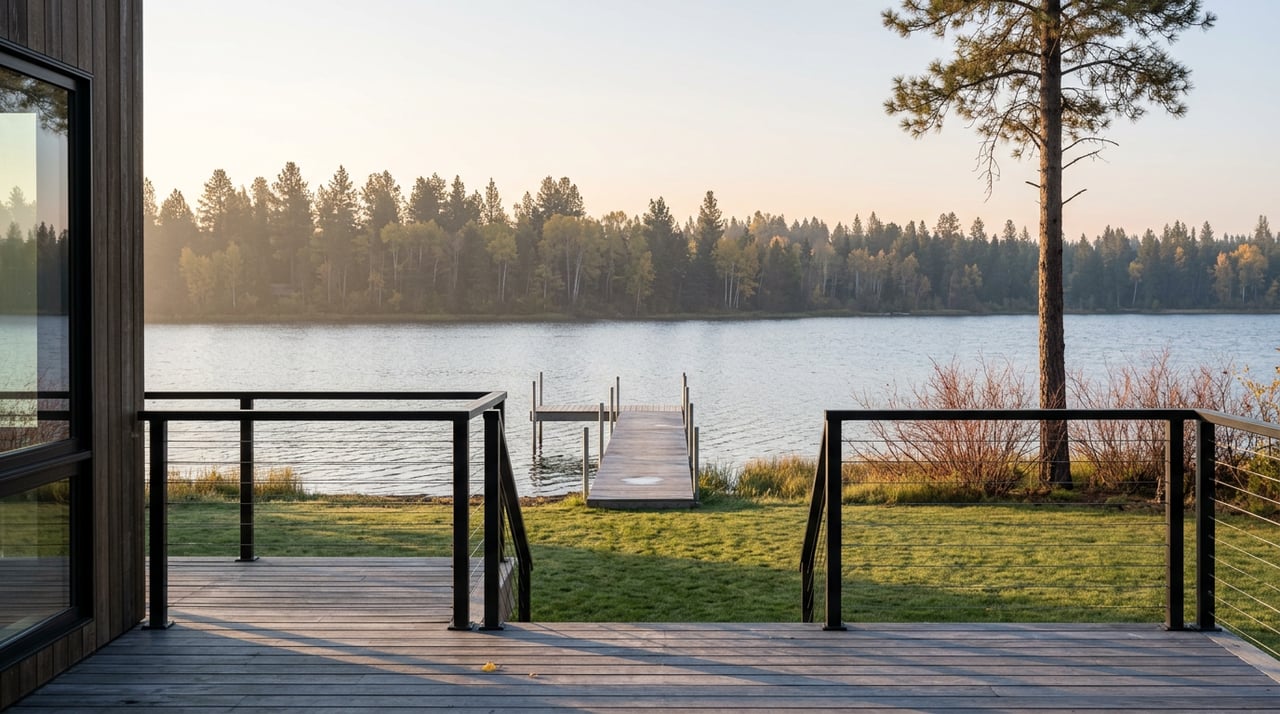
Hayden Lake Fought the Same Fight Three Times This Summer
September 10, 2026
September 10, 2026
"Boats and their wakes have gotten larger, but our lake hasn't." Nancy Spencer said that to the Hayden City Council in March, standing in a packed chamber as a 48-year resident of Hayden Lake. She was talking about a marina expansion. She could have been talking about the entire summer.
This summer, three separate stories have played out on and around Hayden Lake: a marina fight that ended without really ending, a new boat-inspection program now closing out its first season as Labor Day approaches, and a public health advisory that flagged part of the shoreline for the second summer running. Read on their own, they look like three unrelated headlines. Read together, they're the same math problem showing up in three different rooms. The lake has a limit. This was the year that limit got measured out loud.
For the first time this year, the Hayden Lake Watershed Improvement District stationed "lake hosts" at the two public boat launches, Sportsman's Park and Honeysuckle Beach, running the program through Labor Day. Their job wasn't glamorous. They checked registrations, asked boaters where they'd launched last, and looked for hitchhiking mussels on hulls and trailers.
Quagga mussels haven't turned up in Hayden Lake. They have turned up in the Snake River, and Idaho has already spent about $3 million treating that infestation. An Idaho State Department of Agriculture spokesperson put the stakes plainly when asked what a larger outbreak would cost: the bill would climb into the hundreds of millions if the species established itself in additional waterbodies, with costs eventually landing on power ratepayers and irrigators, not just recreational boaters. A single female quagga mussel can produce up to a million eggs a year, according to the Idaho Conservation League, which is the kind of number that explains why a lake with no known infestation still pays two people to stand at a boat ramp all summer.
The program was preventive, not reactive. That distinction matters, because the second story of the summer was not preventive at all.
On August 6, the Panhandle Health District, working with Idaho's Department of Health and Welfare and Department of Environmental Quality, issued a public health advisory for Fernan Lake and the upper end of Hayden Lake after water sampling turned up cyanobacteria, the organism behind harmful algal blooms. The advisory covered the familiar list of precautions: stay out of discolored or scummy water, keep pets and kids away from it, and don't bother boiling or filtering it, because that doesn't touch the toxins. Symptoms range from rashes and vomiting to, in more severe cases, effects on the liver and nervous system.
What makes this advisory worth a second look isn't the warning itself. It's the location. A nearly identical advisory hit the same stretch, the upper end near Sportsman's Park, in July of the previous summer. This isn't a random patch of bad luck. It's the same water, warming under the same conditions, roughly a year apart.
Here's the part that doesn't show up if you only read the news releases separately. At the Hayden Lake Watershed Association's annual meeting in early August, held at the Hayden Lake Country Club and drawing about 100 residents, the conversation wasn't really about mussels or algae as isolated topics. It was about wakes.
HLWID board member Tom Yount, who has worked for the Idaho Department of Environmental Quality and the EPA, explained that sediments released by shoreline erosion, particularly phosphorus carried in from Hayden Creek, feed the exact bacteria that bloom into the toxic algae the health advisories warn against. Association president Jan Wilkins connected the dots further, describing what happens when boat wakes chew into the bank: trees fall in, shorelines collapse, and one lakeside resident told her they'd spent over $30,000 fixing erosion damage on their own property.
Put plainly, bigger wakes erode more shoreline, eroded shoreline releases more phosphorus, and phosphorus feeds the cyanobacteria behind an advisory like the one that just closed part of the lake in August. That's not a coincidence of timing. It's a chain of cause and effect that runs directly through the third story of the summer.
In October 2025, Southern Marinas Hayden Lake LLC filed an application with the Idaho Department of Lands to overhaul the Hayden Lake Marina, the only public marina on the lake. The plan called for removing the existing docks and adding 32 new slips, bringing the total from 216 to 247. The stated reason was boat size. One filing put the average vessel at 22 to 24 feet. A separate statement from the applicant to the Coeur d'Alene Press put it at 24 to 26 feet. Neither number is unreasonable on its own, but the fact that they don't match is worth noting for anyone trying to size up exactly how much bigger the marina's target fleet actually was.
The Hayden Lake Watershed Association's board flagged concerns early: parking shortfalls, added traffic on Hayden Lake Road, safety questions about relocating the fuel dock farther from shore, and a worry that a new pump-out station could invite houseboats to anchor overnight in the lake's bays. Residents who showed up to the March 24 city council meeting made the wake argument directly. Nancy Spencer made her comment that night. Tom Brown, who has owned lakefront property next to the marina for more than 50 years, said he'd never been contacted about the project and only learned of it from a state notice in January. Rob Krcmarov called the process a deliberate avoidance of community engagement.
The council voted unanimously that Tuesday to withhold its letter of support. Three days later, on March 27, the applicant withdrew the permit entirely, and the Idaho Department of Lands canceled the public hearing that had been scheduled for April 15. Marina general manager Lindsey Olmstead framed the withdrawal as a pause to better understand the community's priorities, not a retreat, and left the door open to bring a revised plan back later. No timeline for that has been given, and residents organized as Citizens Against Hayden Lake Marina Expansion have said as much themselves: the hearing is canceled, but the record stays open, and they're watching for the next filing.
None of this resolved anything, which is the point. The Lake Host program wraps its first season on Labor Day, September 7, but the mussels it was watching for haven't gone anywhere else in the region. The algae advisory will lift once two consecutive weeks of clean samples come back, but the phosphorus load that helped trigger it doesn't reset with the season. And the marina application could reappear at any point, with any shape, since nobody involved has committed to a date.
What changed this summer isn't the lake's condition. It's how clearly residents connected the pieces. When Jan Wilkins talked about the multi-generational roots on Hayden Lake, families whose grandparents had homes here and who want their own grandkids to inherit the same water quality, she wasn't describing sentiment. She was describing the reason a watershed board tracks phosphorus levels with the same seriousness a marina fight gets tracked by a citizens group.
Nancy Spencer's line from March holds up as well in September as it did then. The lake hasn't gotten any bigger. Every boat, every dock, every eroding foot of shoreline is drawing against the same fixed amount of water, and this was the year that math got said out loud in three different meetings, by three different groups, about what looked like three different problems.
If you're weighing what any of this means for a specific property on Hayden Lake, from shoreline exposure to how close a parcel sits to the marina or the advisory zone, that's exactly the kind of local detail worth talking through with someone who follows this water closely. Team Rosen Real Estate has spent years watching how these North Idaho lake communities actually function, not just how they're marketed. Let's Connect if you want a straight read on what's happening at Hayden Lake and what it means for you.

Looking for the right home can be a daunting process for first-time buyers and seasoned vets alike.
What determines a buyers’ or sellers’ market? What factors influence home prices?
Partner with our experienced local team to seamlessly navigate buying, selling, or investing with decades of trusted expertise and cutting-edge resources.